

About the Just Transition Commission

Strategic evidence-based research
Policy evaluation and advice
Advice on engagement and the public voice on just transition
Overview
What governance means for our work
The Commission provides independent, evidence-led advice to the Minister for Climate, Energy and the Environment. The Commission’s governance is based on their Terms of Reference and Memorandum of Understanding with its sponsor Department, the Department of Climate, Energy and the Environment.
The Commission also has a Memorandum of Understanding in place with the Climate Change Advisory Council.
How we are appointed
Appointments, terms and balance of expertise
Members are appointed by the Minister under the procedures set out in our Terms of Reference. Appointments aim to balance sectoral expertise, lived experience and regional perspectives.
01
Ministerial appointments following published criteria.
02
Fixed term durations and transparent start/end dates.
03
Selection to ensure representation across communities, unions, industry and research.
04
Declarations published for transparency.
Terms of Reference
01 / 04
Independence and advisory role
The Commission is an independent advisory body. Its workings and procedures are set by their Terms of Reference and are based on impartiality and transparency. The Commission regularly engages with stakeholders, experts and strategic partners in their explorations and produces evidence-based outputs on just transition to advise Government.
Terms of Reference
02 / 04
Mandate and Work Programme
The Commission’s mandate and work programme focuses on the provision of advice and recommendations to Government on policy directions, the integration of just transition considerations into climate policies, independent research, analysis, and advice on engagements and how to channel the public voice on just transition.
Terms of Reference
03 / 04
Engagement
Engagements with those most impacted or vulnerable are key to ensuring a just transition. The Commission has a mandate to advise Government on public engagements and to carry out their own engagements in order to inform the delivery of their work programme.
Terms of Reference
04 / 04
Meetings and procedures
Agendas and minutes of Commission meetings are published regularly and made publicly available to through this website. The Commission regulates its own procedures and ways of working.
Freedom of Information
How to contact the Commission
For all queries and submissions contact the Secretariat at Contact Us
Contact Us
Membership of the Commission
The Just Transition Commission of Ireland was established in late 2024 as an advisory body to the Irish government. The Commission consists of 9 ordinary Members and Chair, appointed by government for a three-year term (2024-2027).
Five members were nominated by the pillars of social dialogue, also referred to as the Agriculture-, Business-, Community & Voluntary-, Environmental-, and Trade Union pillars, and five are independent experts appointed through an open process

Ali Sheridan
Ali has held a range of senior climate leadership roles and has supported the development and growth of climate programmes including at the UN High Level Climate Champions, Fossil Fuel Non-Proliferation Treaty, IKEA, and Bord Bia, as well as previous roles with the Sustainable Agricultural Initiative and An Taisce.
She has supported a diverse range of organisations and sectors to develop credible and just climate transition strategies, has designed and delivered climate related programmes for a range of universities, and is an occasional lecturer.
Ali holds a MSc Business Sustainability, MSc Sustainable Development, and BSc Environmental Management. She sits on
the Advisory Committee of the Environmental Protection Agency, the Advisory Board of the DCU Institute for Climate and Society, and the Board of Common Knowledge. On a local level, Ali has supported her local Sustainable Energy Community, and acted as a Public Participation Network representative.

Conor Minogue
Conor Minogue is a senior policy executive in the business group Ibec. Since joining the organisation in 2012, Conor has held several policy roles. He now works with Ibec members to develop and promote the energy and climate policy agenda for Irish business. He also provides guidance to industry on climate action and sustainability reporting. He was the lead author of Ibec’s Climate Action Toolkit for Business and Ibec’s 2019 Low Carbon Roadmap.
Before Ibec, he worked at the EU Embassy in Washington DC. Conor studied history and international relations at University College Dublin, University of California Berkeley, and Cambridge University. He also holds an Advanced Diploma in Planning and Environmental Law from the King’s Inns.

Diarmuid Torney
Dr. Diarmuid Torney is Director of the DCU Institute for Climate and Society and an Associate Professor in the School of Law and Government at Dublin City University.
His research focuses on climate change policy and governance. He is coordinator of a Horizon Europe project called RETOOL, which aims at strengthening democratic governance for climate transitions in Europe, and leads DCU’s participation in the Research Ireland funded Co-Centre for Climate + Biodiversity + Water. He is an independent expert member of the National Economic and Social Council and a member of the Executive Group of the All Island Climate and Biodiversity Research Network.

Evan Boyle
Dr. Evan Boyle is a Senior Postdoctoral researcher with the MaREI Centre Energy, Climate and Marine co-ordinated by the Environmental Research Institute, University College Cork.
His research focuses on community engagement for energy transitions and transdisciplinary approaches to sustainability. His work has centred on implementing action research methods for co-creating climate action solutions with stakeholders beyond academia through involvement in a number of projects including Dingle Peninsula 2030 (2018-2021), Imaginging2050 (2018-2020), and STEPS (2022-2024), and has sought to inform policy on just and inclusive methods for achieving the energy transition.
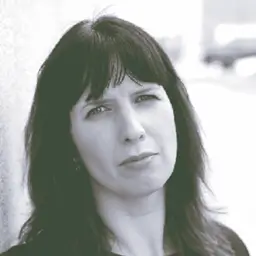
Michelle Murphy
Michelle Murphy is a Research and Policy Analyst with Social Justice Ireland. Michelle provides research, policy analysis and strategic engagement on sustainability, rural development and the impact of policy on income distribution and social inclusion.
She has produced several pieces of social policy research on sustainability and just transition, including policy options to deliver on our climate targets through a just transition framework, the impact of Brexit on a just transition in rural communities in Ireland, the impact of our climate targets on regional development, and trends in income distribution, poverty and social inclusion.
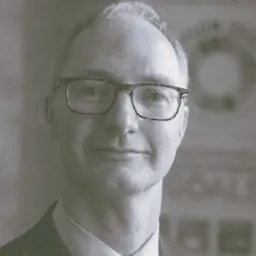
Oisín Coghlan
Oisín Coghlan is a public policy analyst and advisor, specialising in climate and environment. He currently works with the Stop Climate Chaos coalition, the Irish Environmental Network and The Wheel. Until recently he was the chief executive of Friends of the Earth, where he led the 14-year campaign for a strong climate law which culminated in the 2021 Climate Act.
Previously Oisín worked for 10 years in the overseas aid, human rights and global solidarity sector. He holds an MA in International Relations from DCU and a BA in Sociology and Political Science from Trinity College Dublin.

Ryan McKinney
Ryan McKinney is currently Head of Strategic Change at Fórsa, Ireland’s second largest union. In this position, he oversees an ambitious and diverse change programme, leads groundbreaking initiatives including a multi-million-euro investment in a bespoke membership system, designing and implementing internationally developed methodology to transform member participation and delivery on the union’s current strategic plan.
Ryan has over twenty years’ experience in industrial relations and campaigning having held senior roles in the trade union movement in Northern Ireland and in the Republic of Ireland

Suresh Kumar
Suresh Kumar is the Deputy Director for Innovation, Industrial Transformation and Office of Chief Scientific Advisor for the Scottish government and was previously the Chief Operating Officer for the Max Planck Research Society.
Suresh is an experienced senior leader who worked across policy, strategy and operations in the Universities, Research and Innovation sectors focusing on capital projects, talent, skills, entrepreneurship and job creation pathways and state of the art Industry-University infrastructure. He is an expert in public private partnerships, and a strategist in setting future directions for scientific/technological domains at national, European, and international levels in partnership with Business, Industry and SMEs.

Tanya Ward
Tanya Ward is the Chief Executive of the Children’s Rights Alliance. Previously, she was the Deputy Director at the Irish Council for Civil Liberties and also worked with the Irish Centre for Migration Studies, the Irish Refugee Council and the Curriculum Development Unit.
A former lecturer in human rights at TCD and the UCD School for Social Justice, she is a graduate from UCC and has a LLM in Human Rights from Queens University Belfast. Tanya has served on the boards of the International Federation of Human Rights, Mental Health Reform, the Law Centre for Children and Young People and is currently Vice President of Eurochild. She was Chair of the National Advisory Council for Children and Young People and is currently a member of the Programme Board on Senior Cycle Reform. Tanya was awarded the Excellence in Leadership Award in 2024.

Vanessa Kiely O’Connor
Vanessa Kiely O’Connor is a farmer from Innishannon, County Cork. She has graduated with a Diploma in Environmental Science and Social Policy and holds a Diploma in Corporate Direction (Food Business), from UCC. She also holds a Certificate in Business Strategy from UCD.
Appointed as ICOS representative to Teagasc and chairs Teagasc’s Advisory and Education Committee. She is a board director at Bandon Co-operative and also serves on the board of Clona Dairy Products. She is a member of the Women in Agriculture Stakeholder Group and is an ICMSA National Council member, previously serving on their Farm Business Committee.
Previous Commissioners
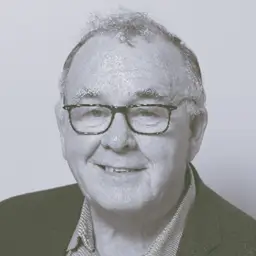
Seamus Boland
Seamus Boland was Commissioner between 2024-2025.
Seamus Boland has expertise in rural and agricultural affairs with over 30 years’ experience working with communities and policy makers. As CEO of Irish Rural Link, he has helped build a national rural network of 600 community organisations. He was Chair of Pobal and served on the Board of the Wheel.
Seamus is also a farmer who lives in the Midlands. He is Chair of The Irish Peatlands Council, and chairs the government interdepartmental committee responsible for implementation of the Peatlands Strategy. He is in his second term as President of the Civil Society Organisations’ Group of the European Economic Social Council.
Notify Me of Future Publications
You can access the report without subscribing. Low-frequency updates only.

We welcome stakeholders, researchers and community representatives to share insights, evidence and examples of fair climate action in practice.